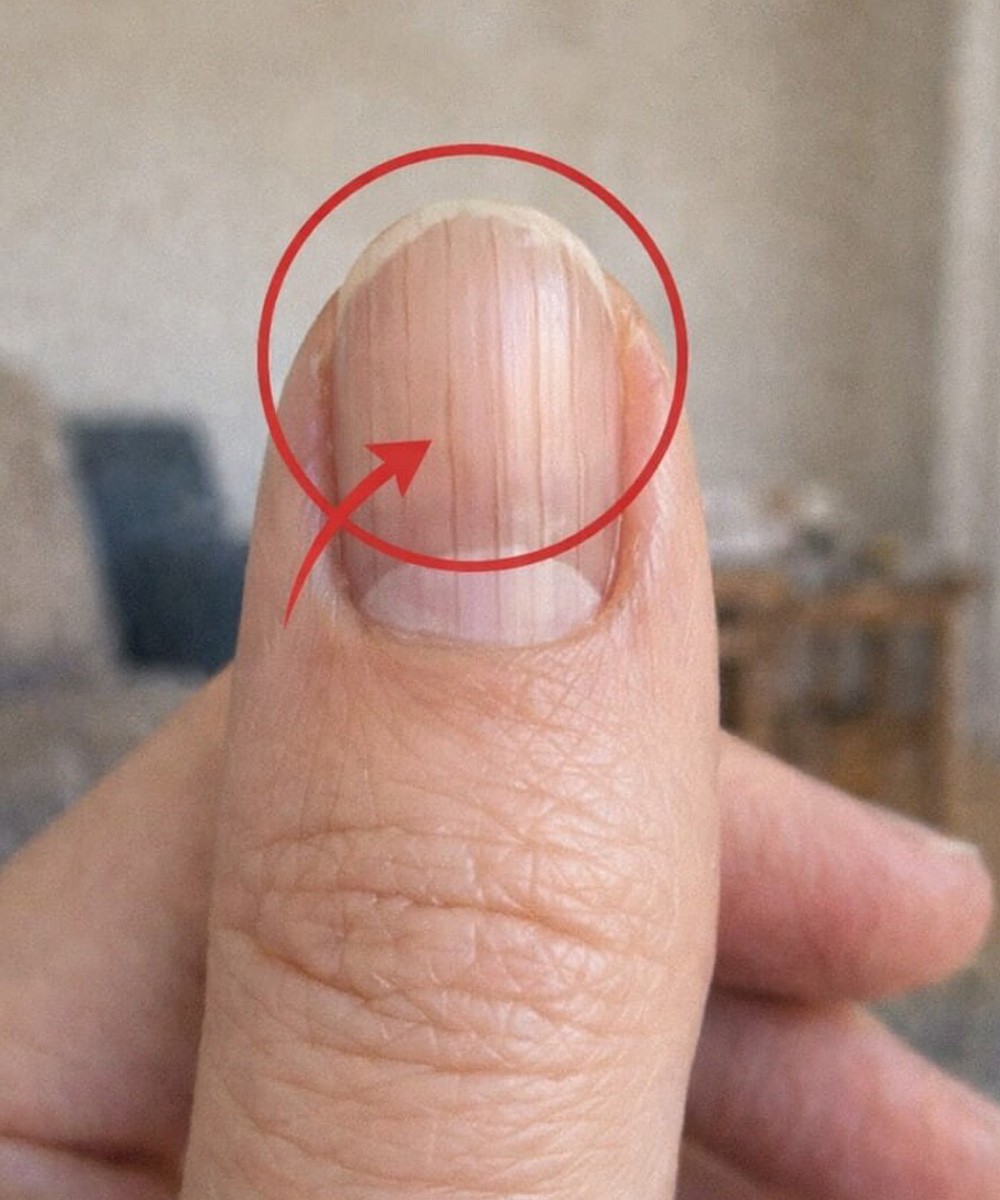
Have you noticed thin vertical lines appearing on your fingernails as you’ve gotten older? If so, you’re not alone. Many people start to notice these changes after the age of 40, and while they’re usually harmless, they can sometimes be a gentle signal from your body that something deeper is going on.
So, what causes these vertical ridges, and when should you pay a little more attention?
Understanding Vertical Nail Ridges
Vertical ridges on the nails—also known as longitudinal striations—are raised lines that run from the cuticle to the tip of the nail. They can vary in depth and number and often become more visible as we age.

For most people, these ridges are simply a normal part of the aging process. Just like skin loses elasticity and hair turns gray, nails also go through structural changes over time. The production of keratin—the protein that forms nails—can slow down or become uneven, leading to changes in nail texture.
Main Causes After Age 40
Natural Aging Process
The most common reason for vertical ridges is simply getting older. As we age, the body’s ability to renew skin cells slows down. This also affects the nail matrix cells (the base of the nail), causing them to produce keratin unevenly and resulting in ridges.
Dehydration of the Nail
Aging skin tends to be drier, and the same goes for nails. A lack of moisture can make the nail plate more brittle and emphasize natural ridges. Regular exposure to water, soap, and cleaning products can worsen this dryness.
Nutritional Factors
Sometimes, ridges can be a sign that your body is asking for more support—particularly nutrients like biotin, iron, or zinc. A varied, balanced diet can go a long way in keeping nails strong and smooth.