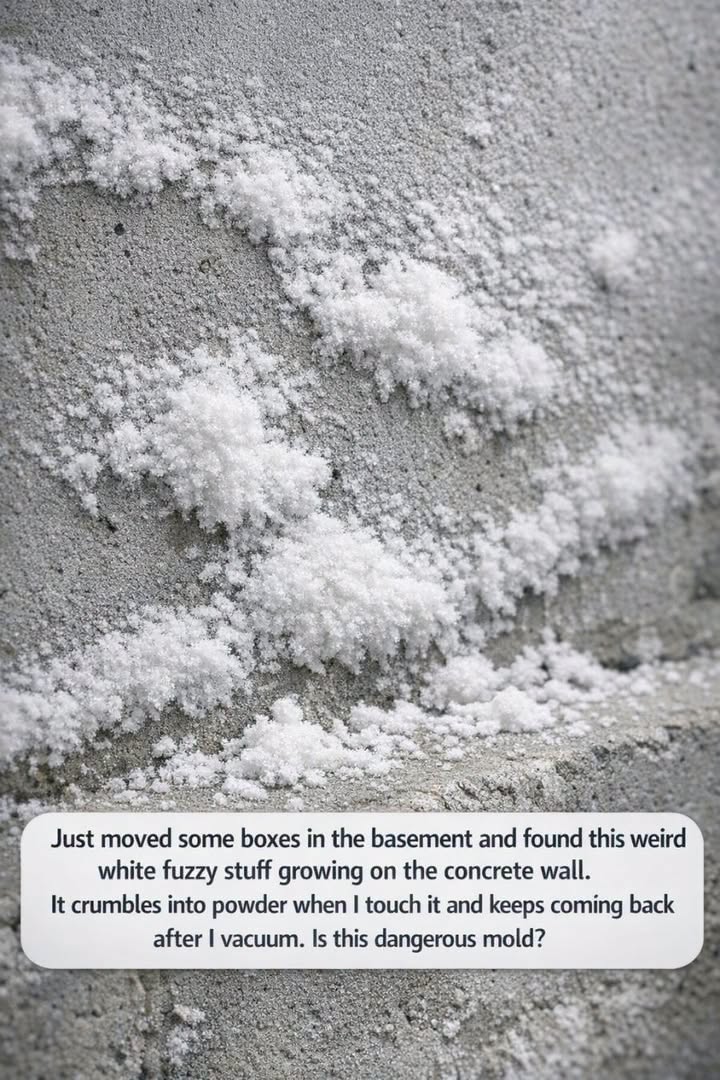
Discovering an unexpected growth on your basement walls can be a concerning experience, especially when that growth is an unfamiliar white, fuzzy substance. While your initial thought might be that it’s mold, it’s important to investigate further before jumping to conclusions. Mold can pose health risks and requires specific treatment, so understanding what you’re dealing with is crucial.
In this article, we will explore the possibilities of what this white growth might be, focusing on two main contenders: efflorescence and mold. We will provide you with the knowledge to identify the substance correctly, understand the implications of its presence, and learn how to address it effectively to maintain a safe and healthy home environment.
1. What That White Fuzzy Stuff on Your Basement Wall Really Is
The white, fuzzy material you’re witnessing on your basement walls is most likely efflorescence, a deposit of salts that forms when water evaporates from concrete or masonry surfaces. When water moves through these materials, it dissolves natural salts, and as the water evaporates on the surface, it leaves behind a powdery white residue. This phenomenon is common in areas with high humidity or moisture problems.
Efflorescence typically appears as a white, powdery substance and is harmless in terms of physical health. However, its presence can indicate underlying moisture issues that need to be addressed to prevent structural damage and potential mold growth. The appearance is usually widespread and can vary in thickness, sometimes forming a crusty surface that crumbles easily to the touch.
2. Efflorescence vs. Mold: How to Tell the Difference at a Glance
Efflorescence and mold can appear similar at first glance, but there are key differences. Efflorescence is a crystalline deposit of salts, which is usually white or light in color and feels chalky or powdery. In contrast, mold can appear in various colors, including black, green, or white, and often has a fuzzy or slimy texture.
To differentiate between the two, perform a simple touch test. If the substance feels like a powder and crumbles easily, it’s likely efflorescence. Mold, on the other hand, tends to smear when touched and may have a distinct, musty odor. Additionally, efflorescence will dissolve in water, whereas mold will not.
3. Key Signs It’s Efflorescence (And Not Dangerous Mold)
One of the primary indicators that you’re dealing with efflorescence is its location and the environmental conditions. Efflorescence typically occurs on concrete, brick, or masonry surfaces in areas with high moisture. It is generally white or light-colored, and when touched, it leaves a powdery residue on your fingers.
Another sign is the absence of a musty smell, which is often associated with mold. Efflorescence will also dissolve if you spray it lightly with water, while mold will not change. Finally, consider the environment: if the area is consistently damp or you notice water intrusion, efflorescence is more likely to occur as a result of evaporating moisture.
4. When White Growth on Concrete Could Actually Be Mold
While efflorescence is more common, mold can also appear white and fuzzy in its early stages, particularly in environments with organic material for it to feed on. Mold might grow if there’s continuous moisture combined with organic material like dust, wood, or paper backing on drywall.
If the white substance on your walls does not dissolve in water and emits a musty odor, you may be dealing with mold. Additionally, if the growth spreads quickly or changes color, it is advisable to test for mold and consider professional assessment and remediation.